

About Resezido Climate
Eleven years in Austin attics, and we still open the return plenum before we quote a swap.
We are a four-technician HVAC crew working out of a shop on Workshop Way, not a franchise with a call center. If you call, one of the people who answers is one of the people who might show up.
- 11 yrs in Austin, TX
- 4 technicians on the tools
- 2 running dispatch and the shop
- 1 load calc, every job
01
Who's actually on the invoice
Resezido is the trading name on the van door, the invoice, and the sign above the shop bay — the same name behind resezido.com — operating as Resezido Climate out of a workshop in Austin, Texas. It's a residential and light-commercial HVAC contracting business — installs, repairs, tune-ups, ductwork, thermostats and zoning — not a marketing front for a national chain, and not a manufacturer's captive install crew pushing one brand.
The company has been doing this work in Austin for eleven years. That's long enough to have replaced systems we installed in year two, long enough to know which zip codes have attics you can stand up in and which ones you're crawling through insulation on your stomach, and long enough to have a stack of call-backs from other contractors' installs that we keep as a kind of unofficial case file.
The crew is four technicians plus two people running the shop and answering the phone. That's the whole operation. There's no regional manager, no fleet of subcontractors bidding jobs out to whoever's cheapest that week. If your name is in our system, one of six people already knows it.

What the crew actually does
Five jobs, one crew, no subcontracting out the hard parts
A furnace swap, a mini-split add-on, a duct-sealing job, a thermostat with a real C-wire, a seasonal tune-up — the same four technicians handle all five, because the diagnosis for one is usually the reason for another.
Day to day, the work splits into heating, cooling, ventilation, automation and maintenance, and we treat those as one trade, not five specialties handed to five different vendors. A technician who spent the morning sealing duct joints with mastic in a Zilker Park attic is qualified to size the heat pump for that same house in the afternoon, because static pressure and load calculation are the same math whether you're fixing airflow or replacing the box that moves it.
We install gas furnaces and heat pumps, central AC and ductless mini-splits, ERV fresh-air systems, zoning dampers and smart thermostats, and we run a maintenance plan for the systems we've already touched. We do not do new-construction rough-in on spec-built subdivisions and we do not do commercial chiller work — those are different trades with different crews and different insurance, and a company that claims to do everything usually does most of it badly.
Every one of those five services gets a full page of its own on this site, with the actual catalogue items, what they're built from, and what they cost to start. This page is about who's doing the work, not what the work is.
- Operating since
- 11years in Austin, Texas, residential and light-commercial HVAC
- On the tools
- 4technicians, no rotating subcontractors
- Typical furnace swap
- 1day, when the ductwork doesn't need rework
- Full duct rework
- 2–3days, depending on attic access
The refusal, stated plainly
A bigger condenser bolted onto undersized, leaky ductwork just runs longer, wears out sooner, and still leaves the back bedroom five degrees warm.
The single most common failure we get called to fix after someone else's install
We've turned down jobs. Not many, because most homeowners are relieved when someone finally explains why the old system never worked right — but a few times a year a customer wants a bigger unit dropped in over ductwork we know is already choking the smaller one, and we won't do it. Not because the sale is bad for us. Because the install would fail in eighteen months and it would be our name on the failure.
Every install we do starts with a load calculation and a look inside the return plenum. If the numbers say the existing ducts can't move the air a new unit needs, we say so before we write a price, and the quote covers the duct work, not just the box.
Where the work gets built
A shop, not a showroom
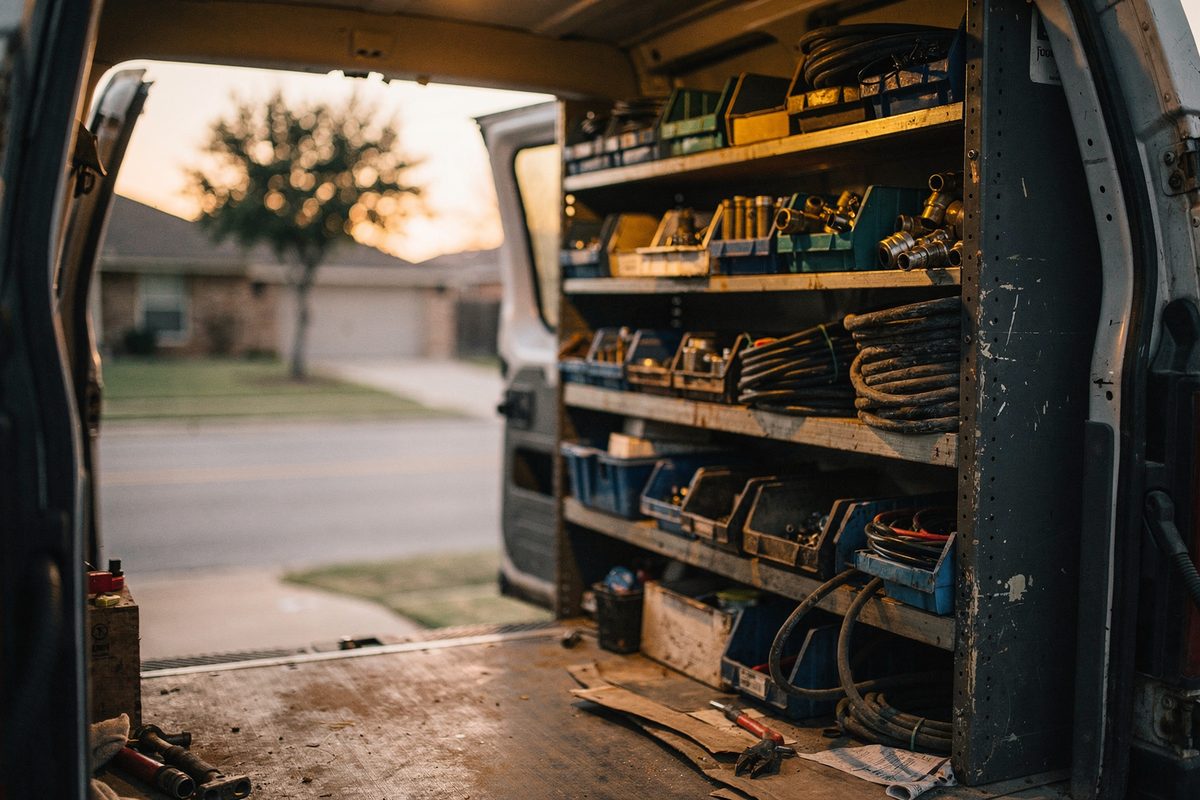
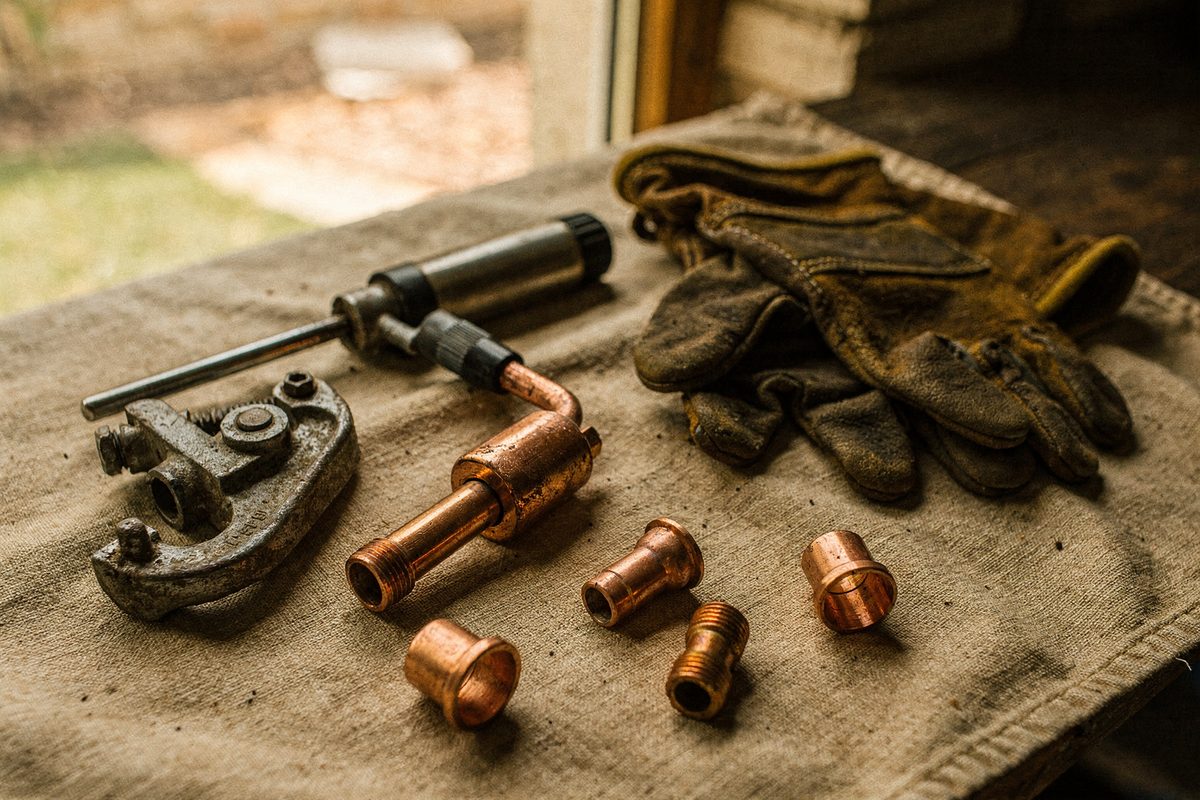
The workshop at 73 Workshop Way is where line sets get cut to length, where the pegboard holds the wrenches and pipe cutters that actually leave dents in a truck bed, and where a tool belt gets restocked between calls instead of restocked once a season. There's no reception desk and no product wall lit like a jewelry counter. It's a working bay with refrigerant tanks racked against one side and a bench that's never fully clean, because it's never fully idle.
That matters for one reason a customer can actually check: turnaround. Because fittings, filters, dampers and common thermostat models are stocked on site rather than ordered per job, a same-day emergency repair call usually doesn't stall waiting on a part, and a scheduled furnace swap doesn't slip a week because the distributor is backordered. We keep enough stock to run the jobs we take on, not enough to call ourselves a warehouse.

The story behind the stance
Why we stopped matching nameplates
Early on, the standard in this trade — and still the standard at most of the companies bidding against us — is to read the tonnage off the old unit's nameplate and quote the same number back, sometimes a size up "for good measure." It's fast to quote and it's wrong more often than it's right, because the nameplate tells you what somebody installed ten or twenty years ago, not what the house actually needs today. Insulation gets added. Windows get replaced. A sunroom gets built onto the back. None of that shows up on a nameplate.
We stopped doing it after a callback that's stuck with the crew for years: a customer in East Austin had a 3.5-ton condenser installed by another company eighteen months earlier, matched straight off the old unit, on a duct system that had never been designed to move that much air. The system short-cycled constantly, the electric bill had nearly doubled, and the back bedroom still ran five degrees warmer than the living room in August. We ran a Manual J load calculation and found the house needed closer to 2.5 tons — the ductwork simply could not deliver more than that without the static pressure climbing past what the blower could handle. The fix wasn't a bigger unit. It was sealing six leaking duct joints with mastic, resizing two undersized runs, and installing a correctly sized 2.5-ton system. The bill dropped, the cycling stopped, and the bedroom finally held temperature.
That job is why every quote we write now starts with a load calculation and a static pressure test, not a tape measure held up to the old box. It costs us a little time up front and it has cost us jobs from customers who wanted a same-day price over the phone. We'd rather lose that job than install one we don't believe in.
Mastic, not tape, on every duct joint we touch — tape lets go in a hot attic within two summers, and we've pulled enough failed tape jobs off other people's work to trust the numbers on that. Thermostat wiring gets a new run of wire when the room doesn't already have a common terminal; we don't fake a C-wire with a battery adapter, because adapters drain and thermostats start dropping wifi and rebooting at the worst possible hour. These aren't marketing points. They're the two callbacks we refuse to generate for ourselves.
Reach the shop
Talk to the crew, not a script
Call or email and you'll reach dispatch at the Workshop Way shop directly — the same two people who schedule the technicians, not an answering service reading from a card. Dispatch is staffed through the working week; we don't post fixed hours because installs already on the books and emergency calls both move the schedule day to day, but a call placed during the day reaches a person, not a queue.
- +1 (213) 555-8290 reaches dispatch directly for scheduling, emergency calls and general questions.
- office@resezido.com for anything you'd rather put in writing, including a request about your data — we reply from the same inbox a technician checks each morning.
- The shop sits at 73 Workshop Way, Apt 3, Austin, Texas 59066 — it's a workshop and dispatch office, not a walk-in retail showroom.
Full contact details, the inquiry form, and a note on how far our trucks travel outside Austin proper are on the contact page. If you're not sure yet whether your problem is airflow, equipment, or controls, the System Fit Checker will point you at the right page in about a minute.